AI Solutions For Retail - Reclaim Your Consumer Intelligence Layer
Deploy AI automation trained on your specific data. Eliminate preventable shrink, close the inventory accuracy gap, automate FSMA traceability without replacing existing systems.

The Intelligence Gap
The retailers compounding margin advantage in 2026 share one structural characteristic: they own their consumer intelligence. Every transaction, every loyalty interaction, every inventory signal compounds inward — toward their models, their infrastructure, their decisions.
The Financial Leak
$80M-$120M revenue leakage from a 5-point inventory accuracy gap at the $2B operator tier.
(McKinsey Retail, 2021)
The Shrink Exposure
73% of $90B in annual US retail shrink is preventable with trained intelligence.
(Appriss Retail, 2026)
The Compliance Risk
$50M-$150M maximum at-risk brand partnership exposure from FSMA traceability gaps.
(FDA / Retailer Requirements, 2026)
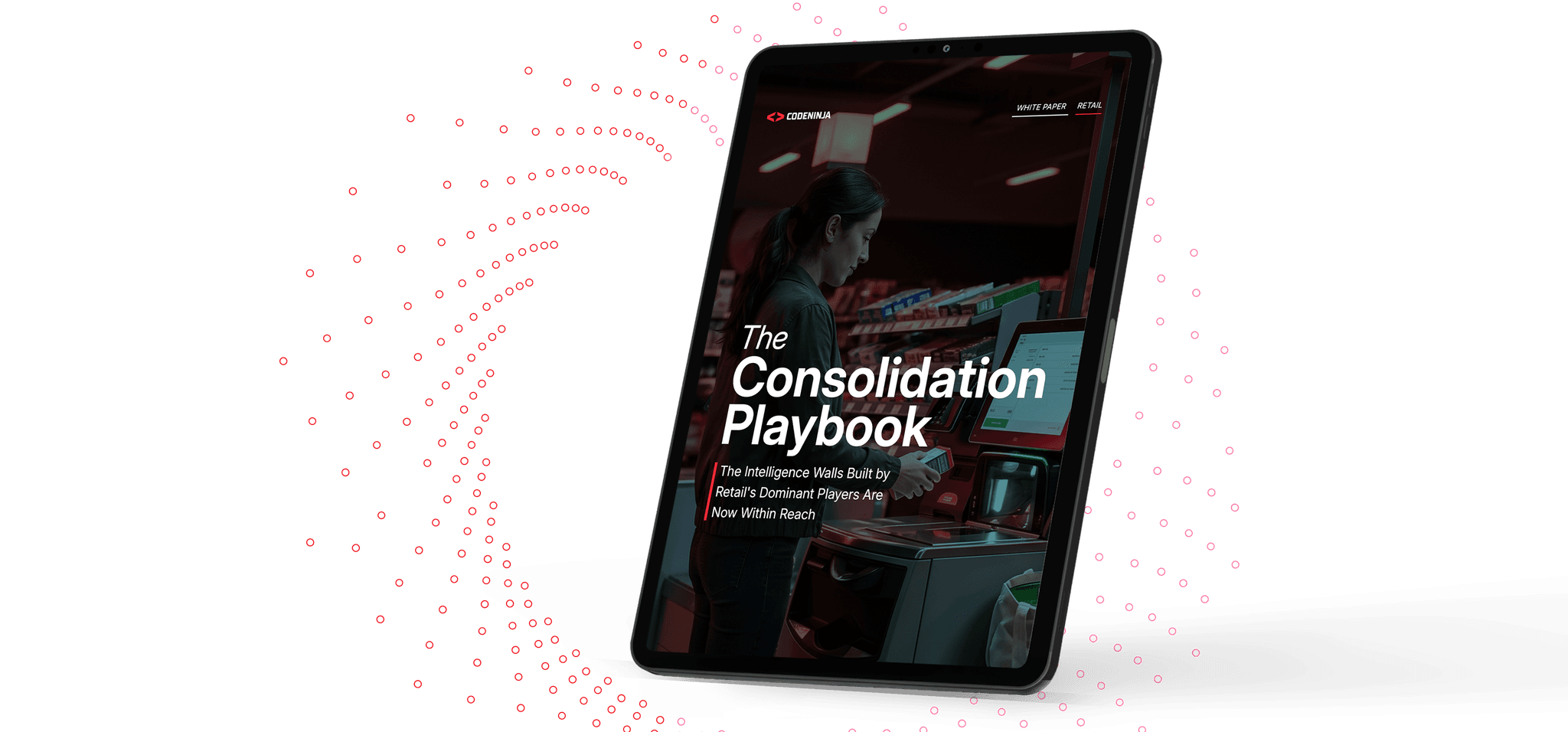
The Intelligence Walls Built by Retail's Dominant Players Are Now Within Reach
Download the full whitepaper to learn how retail leaders can build intelligence systems they own, control, and scale.
The Failure of Fragmented Systems
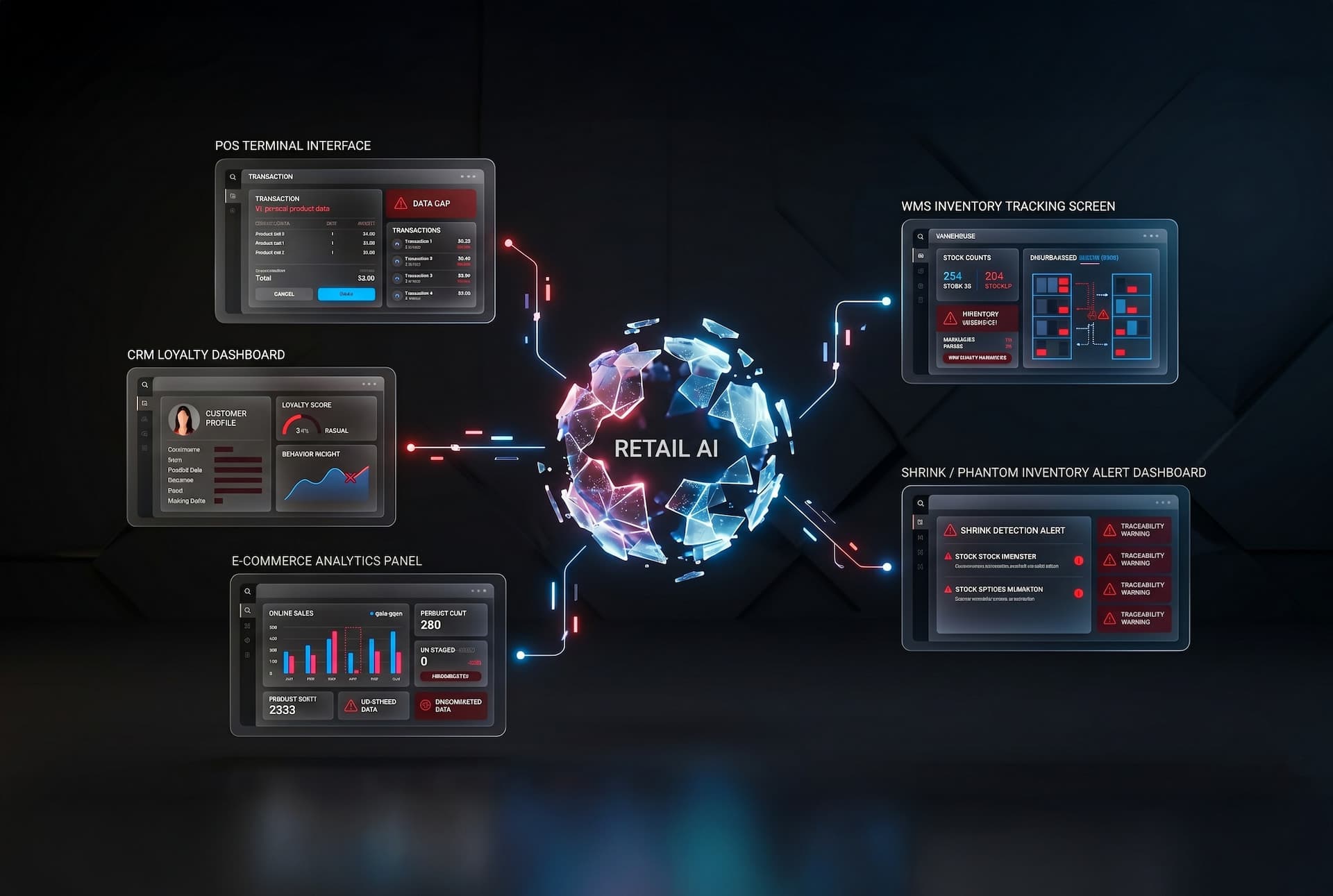
Traditional retail infrastructure is designed to record, not to reason. When a self-checkout bypass occurs, a phantom inventory event develops, or a traceability audit is requested, current systems fail:
- POS captures transactions but the vendor retains the aggregated learning
- The e-commerce platform captures online behavior but operates as a closed ecosystem
- The CRM holds loyalty history but does not connect to inventory or shrink data
- The WMS tracks stock movement but cannot interpret demand signals from online channels
- The result: no single picture of the consumer journey exists inside the retailer's own infrastructure
The Compounding Cost of Vendor Dependency
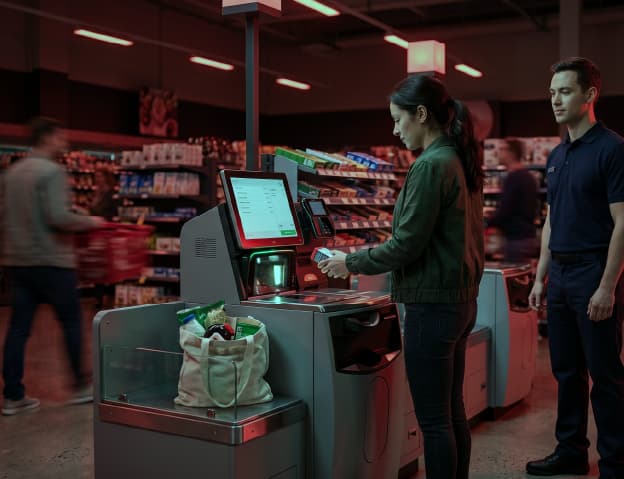
- Self-checkout shrink runs at 3.5% of SCO transactions vs. 0.8% for staffed checkout. Traditional systems detect it during reconciliation — weeks after the loss (Retail LP Research Council, 2025)
- Phantom inventory, where the system shows in-stock and the shelf is empty, does not appear in any shrink metric. It is a silent revenue drain
- Manual SKU documentation at 1,000 to 5,000 movements per store per day is operationally impossible without owned automation
- Growth requires proportional headcount increases in loss prevention and compliance. Scale breaks the margin link
Operational Constraints Creating the Visibility Gap
These are not isolated inefficiencies. They are structural conditions that compound against margin at every operational cycle.
Store Operations
- 30-50 admin hours weekly on manual shrink review and inventory reconciliation — 80% redundant but 100% legally necessary.
- Dispute resolution and stock discrepancy investigation take days; consumers and partners repeat accounts across siloed systems.
- Inventory accuracy sits at 70-78% for mid-market operators without unified AI infrastructure; top-quartile operators exceed 95%.
Compliance & Risk
- FSMA 204 lot-level traceability required per SKU movement; enterprise brand partners enforcing standards ahead of federal timelines.
- Audit readiness constructed retroactively, not embedded as a workflow output — compliance reports require weeks of manual compilation.
- Enterprise brand partners require lot-level traceability data per shipment — not category averages — as a contract renewal prerequisite.
Operational Scale
- Self-checkout shrink detected after loss; general detection systems run 40-60% false positive rates on context-specific behavior.
- 20% location growth requires proportional headcount in loss prevention and compliance; scale breaks the volume-margin link.
- Consumer intelligence generated across in-store and online channels fragments across vendor platforms that do not share context.
Engineering Sovereign Intelligence for Retail Operations
Operational resilience is built by embedding owned reasoning into the workflows that drive consumer experience, margin, and compliance. These are the four capabilities CodeNinja structures every retail engagement around.
- Shrink Intelligence and Behavioral Reasoning
- Inventory Intelligence and Demand Forecasting
- Lot-Level Traceability Automation
- Sovereign Weights and Golden Path Datasets
Shrink Intelligence and Behavioral Reasoning
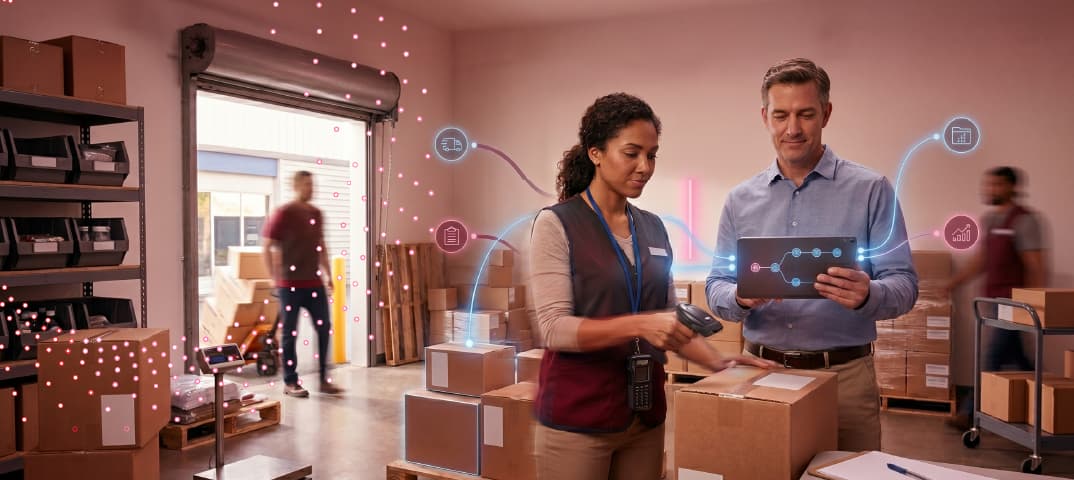
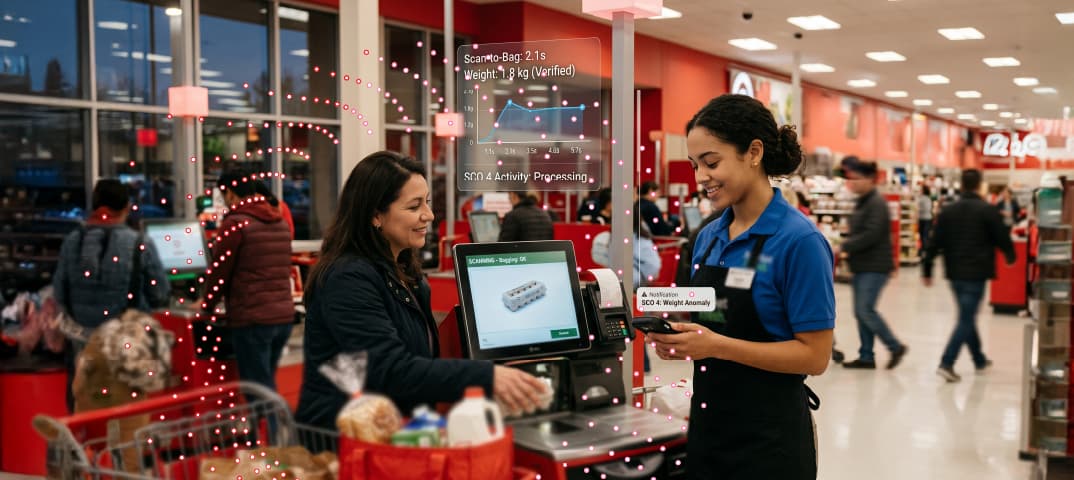
AI automation trained on your specific transaction sequences, self-checkout patterns, and shrink signatures. The model learns what normal looks like in your environment at the category, location, and daypart level — and flags deviation during the transaction, not during the next inventory reconciliation.
Mechanism:
Process Reward Modeling rewards the model at each step of the reasoning chain, not only on final state classification
Impact:
55% reduction in preventable shrink; admin burden reduced from 30-50 hours/week to under 8 hours/week


Solution Architecture: The Sovereign Intelligence Deployment
To build durable margin in retail, operators must close the intelligence ownership gap. Our architecture operates in two phases: AI-driven automation embedded into existing infrastructure, followed by Hyper — owned application infrastructure that makes the intelligence permanently accessible without vendor intermediaries.

PHASE - A
AI-Driven Automation Layer
Zero-Disruption Integration: Connects to existing POS, WMS, e-commerce platform, CRM, and supplier portal via standard APIs. No platform replacement. No parallel data system. No operational downtime.
Process Reward Modeling (PRM): Knowledge Teams reward models at each step of the reasoning chain, ensuring the AI understands causation — not just correlation. The model learns your specific baseline, not the industry average.
Temporal Intelligence: Evaluates event chains — identifying that inventory showed normal velocity at 2PM and an anomalous gap at 5PM following a shift change, not merely that a discrepancy exists at month-end.
Adversarial Validation: Double-blind annotation protocol ensures published accuracy targets are validated against the standard the retailer can defend in insurance proceedings and enterprise partner audits.

PHASE - B
Hyper: Owned Application Infrastructure
Owned Omnichannel Application Layer: Hyper generates the inventory management, workflow automation, compliance tooling, and omnichannel operational systems the retailer owns permanently — built into their own repositories.
MCP-Enabled Connectors: Bidirectional integration between the AI automation layer and existing WMS, POS, and e-commerce infrastructure. AI agents access operational intelligence directly — no middleware, no vendor permission.
Total Sovereignty: All fine-tuned models and Golden Path datasets transfer to the retailer at Phase B completion. Deploy, update, extend, or migrate without CodeNinja involvement or consent.
Structural Cost Advantage: Built faster than legacy development timelines at a lower structural cost than the SaaS contracts it replaces — source code lives in the retailer's repositories, not on a shared vendor platform.
Reclaiming the Consumer Intelligence Layer for Heartland Grocery Group (HGG)
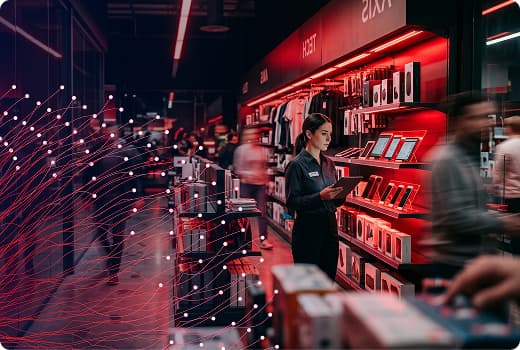
Use Cases: Sovereign AI for Production Retail Operations
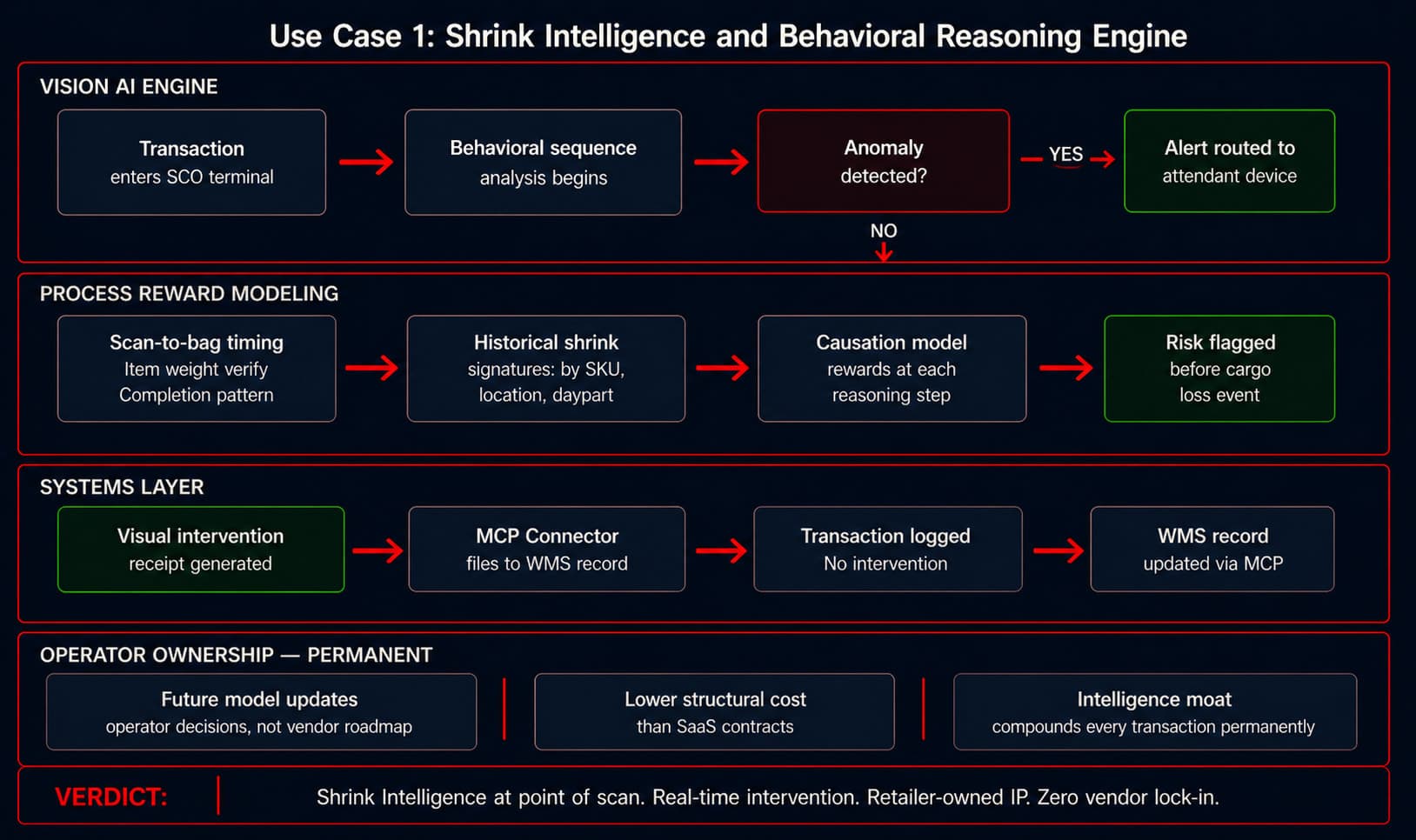
Shrink Intelligence and Behavioral Reasoning Engine
The Problem:
Mid-market retailers absorb 30-50 hours weekly on manual shrink review and inventory reconciliation. When a self-checkout bypass or stockroom discrepancy occurs, staff locate transaction logs, cross-reference camera footage, and produce documentation that arrives after the loss has already been absorbed. Self-checkout shrink runs at 3.5% of SCO transactions — more than four times the rate of staffed checkout (Retail LP Research Council, 2025). Traditional detection systems generate 40-60% false positive rates because they apply general rules to context-specific behavior. Detection happens during the next inventory cycle, not during the transaction.
The Solution:
The Shrink Intelligence Module deploys at every self-checkout terminal and stockroom entry point. It evaluates event chains in real time: scan-to-bag timing, item weight verification, transaction completion patterns, and historical shrink signatures at the category, location, and daypart level. When a deviation is detected, an intervention signal routes to the nearest attendant's device with the specific SKU mismatch and visual confirmation. The intervention happens during the transaction — not during the next inventory reconciliation. Admin burden drops from 30-50 hours per week to under 8 hours per week. At the conclusion of the engagement, the fine-tuned model weights and training data transfer permanently to the retailer.
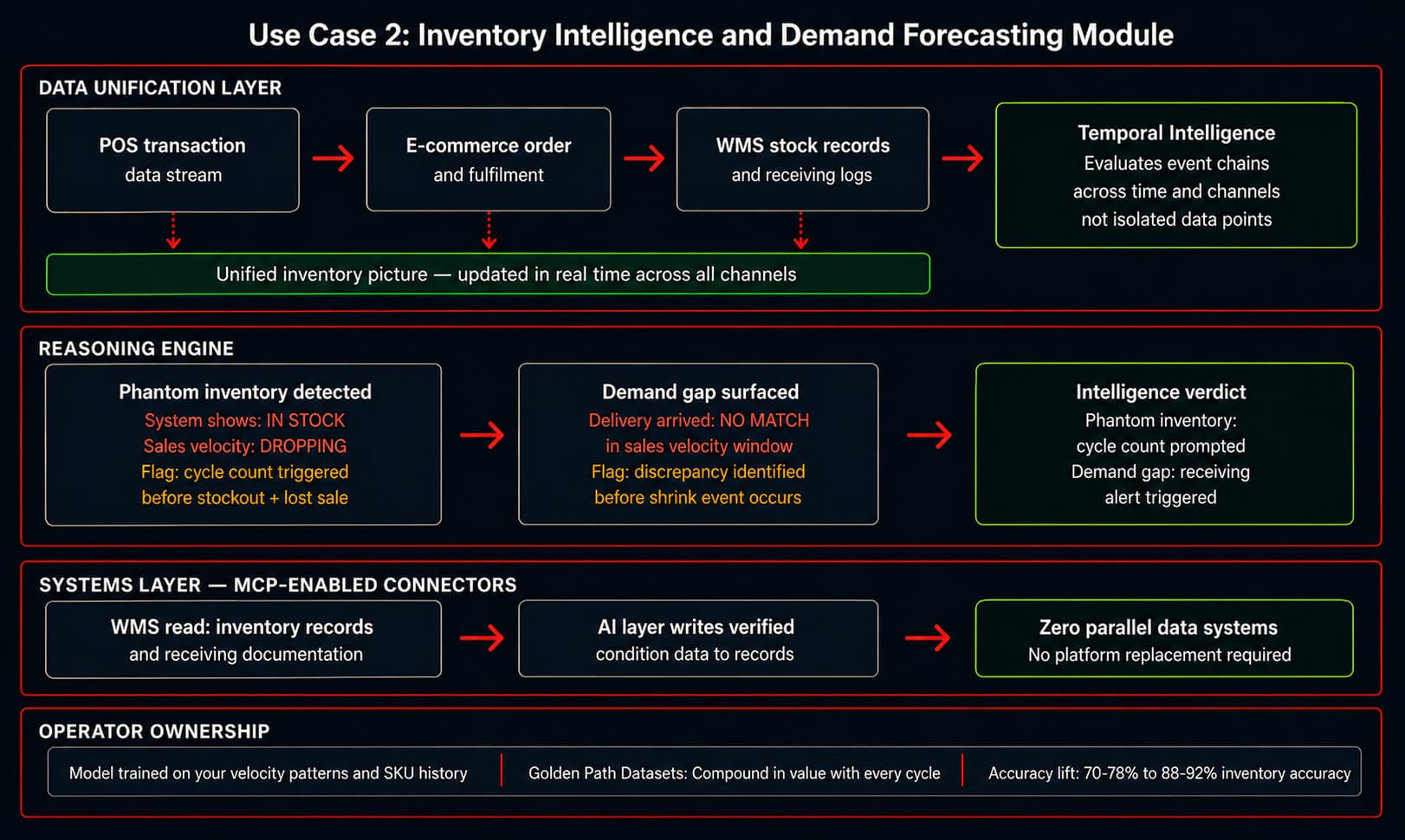
Inventory Intelligence and Demand Forecasting Module
The Problem:
Mid-market retailers without unified AI infrastructure operate at 70-78% inventory accuracy. Top-quartile operators with owned intelligence infrastructure exceed 95%. The gap is not visible in any shrink report because phantom inventory — where the system shows in-stock and the shelf is empty — appears as a demand shortfall rather than an inventory failure. A 5-point accuracy gap costs a $2 billion retailer between $80M and $120M in annual revenue leakage through stockouts, markdowns, and online fulfillment failures (McKinsey Retail, 2021). The cause is not a headcount problem. The data to close the gap exists. It is siloed across platforms that cannot share context.
The Solution:
The Inventory Intelligence Module connects POS transaction data, e-commerce order data, and WMS stock records into a unified picture updated in real time. When the system shows in-stock and sales velocity drops below the expected pattern for that SKU at that location, the discrepancy is flagged and a cycle count is prompted before the stockout becomes a lost sale. When a delivery arrives and does not appear in sales velocity within the expected window, the gap is identified before it becomes a shrink event. The module operates across in-store and online channels simultaneously, so the inventory picture is never fragmented between channels.
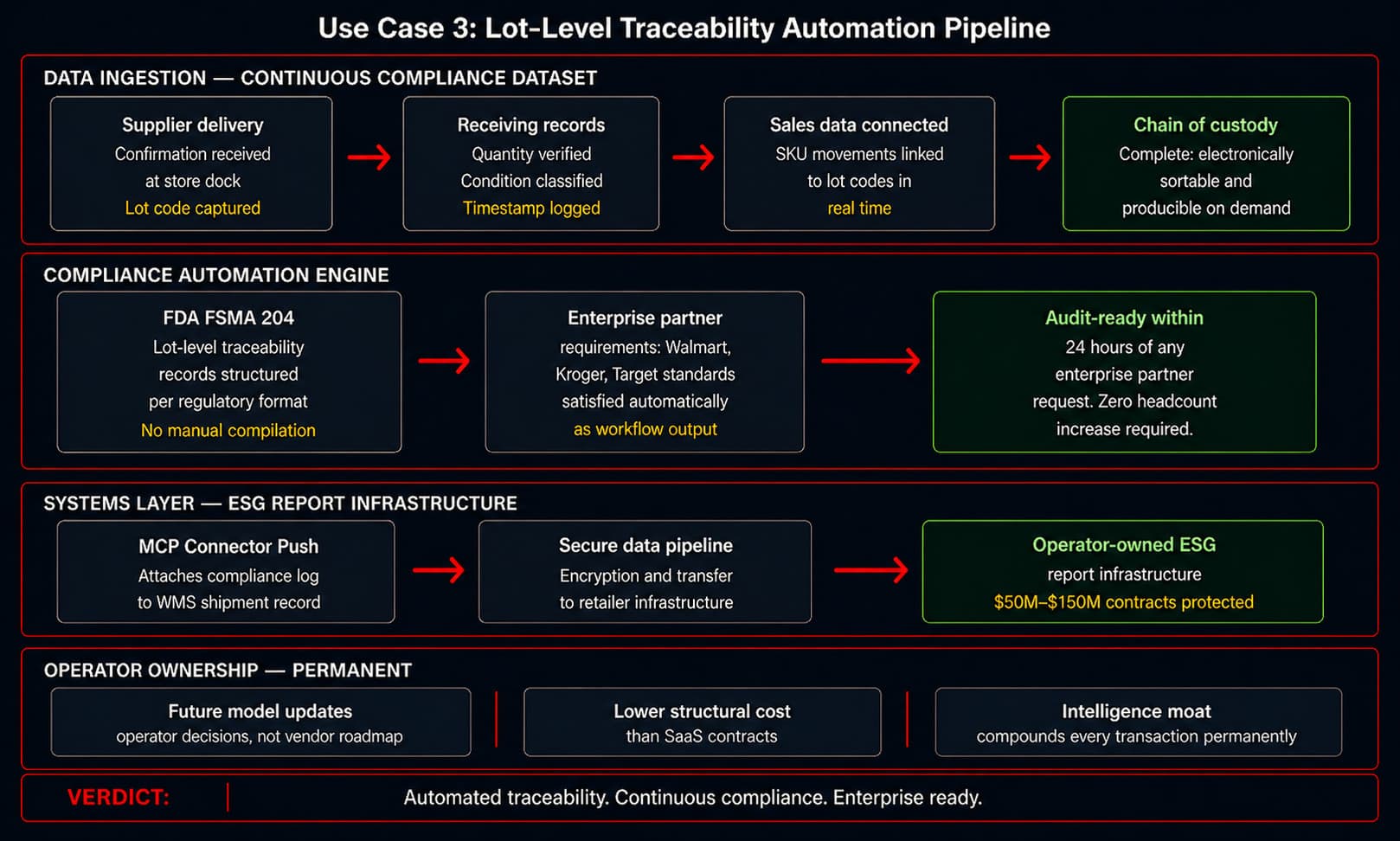
Lot-Level Traceability Automation Pipeline
The Problem:
Enterprise brand partners are enforcing lot-level traceability requirements ahead of federal timelines. Walmart, Kroger, and other major retailers require suppliers and retail partners to confirm traceability eligibility and provide electronically sortable records on demand. Manual SKU documentation at 1,000 to 5,000 movements per store per day is operationally impossible at mid-market scale. Retailers without owned traceability infrastructure face between $50M and $150M in at-risk brand partnership revenues, with exposure growing as enterprise partners expand requirements to a wider product range. The compliance gap does not show up as a cost. It shows up as a lost contract renewal.
The Solution:
The Traceability Automation Pipeline creates a continuous, structured compliance dataset from existing store operations — connecting supplier delivery confirmations, receiving records, and sales data into a chain of custody that is electronically sortable and producible within 24 hours of any enterprise partner request. No new hardware. No additional headcount. The compliance record belongs to the retailer permanently and compounds in value as the store footprint grows. What begins as a compliance requirement converts into a commercial qualification criterion that competitors without owned infrastructure cannot satisfy.
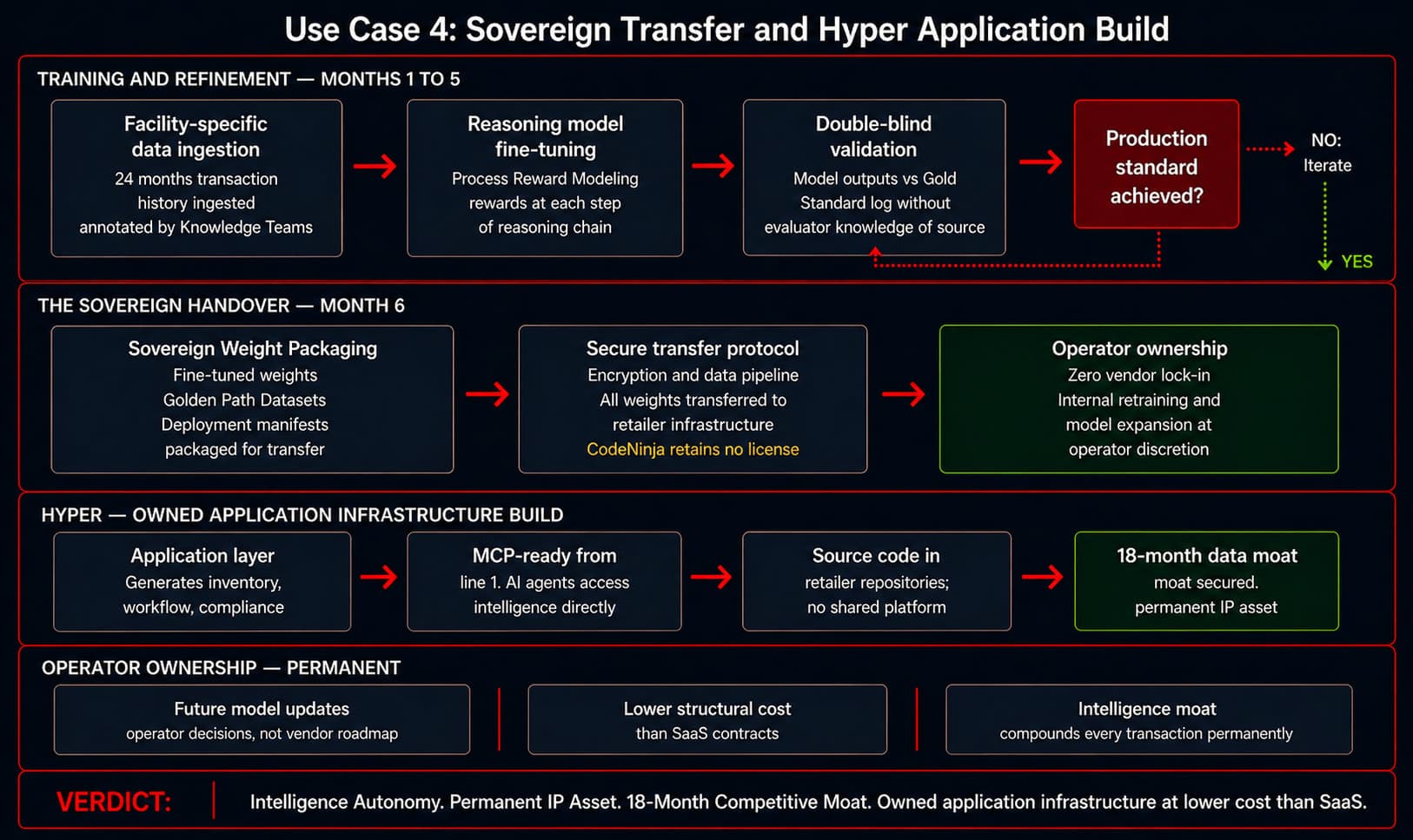
Sovereign Transfer and Hyper Application Build
The Problem:
Enterprise AI relationships in retail create a structural dependency where the vendor owns the intelligence and the retailer owns the hardware, the operational data, and the liability. Detection parameters cannot update without vendor approval. New shrink patterns cannot be addressed without vendor roadmap prioritization. Migration to superior infrastructure requires vendor cooperation on model portability. Meanwhile, retailers who deployed owned intelligence in Month 6 are compounding their advantage quarterly — while competitors remain in vendor scoping cycles that consistently run 18 to 24 months before production deployment.
The Solution:
At the conclusion of the 6-Month Sovereign Intelligence Cycle, all fine-tuned weights from the facility-specific training cycle transfer to the retailer's infrastructure. Golden Path datasets — the curated, domain-expert-validated training corpus — become permanent retailer intellectual property. The retailer may deploy, update, extend, or migrate these models without CodeNinja's involvement or consent. Simultaneously, Hyper builds the owned application layer — inventory systems, workflow automation, compliance tooling — into the retailer's own repositories, MCP-ready from the first line of code, at a lower structural cost than the SaaS contracts it replaces.
Stay Ahead with Our Latest Blogs
18 May, 2026
Consumer Data Compliance in US Retail: A Commercial Moat
Learn how US consumer data compliance separates retailers with owned infrastructure from vendor-dependent operators and why that gap is now a commercial moat.
4 May, 2026
Data Sovereignty in U.S. Retail: The Structural Gap Driving Industry Consolidation
U.S. mid-market retailers generate consumer intelligence daily. Most compounds toward SaaS vendors, rather than the retailer. This data ownership gap drives consolidation.
Frequently Asked Questions