Intelligent Automation Trained on Your Operational Reality.
CodeNinja deploys AI automation into the enterprise workflows where organizations make their most consequential decisions. Trained on institutional knowledge and operational history, these systems compound operational intelligence and remain permanently under organizational control.

Your Operations Hold Intelligence That Your Systems Cannot Use

Your Operations Hold Intelligence That Your Systems Cannot Use
Enterprises are running high-stakes workflows on systems that capture decisions but cannot reason over them. Credit assessments, compliance reviews, procurement approvals, fraud evaluations, and document processing are executed manually or through rule-based automation that applies generic logic to context-specific situations.
The intelligence required to make these workflows faster and more accurate already exists inside your organization. Years of case outcomes, compliance judgments, approval patterns, and operational exceptions accumulated across thousands of transactions. It sits in structured databases and unstructured document archives that no standard AI system can access without a purpose-built integration layer trained on your specific operational reality.
CodeNinja surfaces that intelligence and deploys it inside the workflows where it changes outcomes. Models are trained on your data, calibrated to your risk tolerance, and structured to operate within your governance and compliance requirements. When the engagement ends, the model weights and training datasets transfer to your organization permanently.
Workflow Categories Across Industry Verticals
Compliance and Regulatory Monitoring
Continuous monitoring of operational data against regulatory requirements, policy frameworks, and internal controls across financial services, healthcare, energy, and government sectors. AI systems that surface compliance exceptions in real time rather than through periodic audit cycles, calibrated to the specific regulatory environment of each industry.
Document Intelligence and Processing
AI automation for document-heavy workflows including contract review, invoice processing, tender analysis, clinical documentation, regulatory filing preparation, and supply chain documentation. Systems that extract, classify, and route document intelligence with full audit records across any industry that runs on structured and unstructured document flows.
Operational Risk and Anomaly Detection
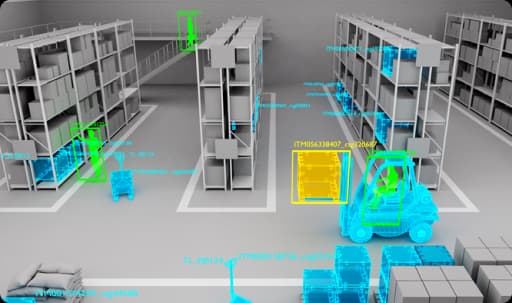
Behavioral pattern analysis trained on your transaction and operational history to identify risk signatures, anomalous activity, and process failures before they crystallize into losses. Applicable across financial fraud detection, equipment failure prediction in energy and manufacturing, supply chain exception identification, and clinical risk flagging in healthcare.

Procurement and Supply Chain Automation
AI automation across procurement workflows including supplier evaluation, purchase order processing, contract compliance monitoring, and supply chain exception management. Trained on your operational history and applicable across logistics, manufacturing, retail, energy, and government procurement environments.
Agentic Workflow Orchestration
Autonomous AI agents operating across multi-step enterprise workflows, making context-aware decisions and routing exceptions for human review. Built on open-source foundations with deterministic action controls and full auditability. Applicable wherever complex, multi-step decision workflows currently require manual coordination across departments or systems.
Customer Intelligence
AI systems that interpret behavioral signals, service patterns, and interaction histories to improve decision-making in customer-facing and citizen-facing workflows. Applicable across retail, financial services, healthcare, and government service delivery where understanding the context behind each interaction changes the quality of the outcome.
The IRAC Agent Architecture
Agentic systems do not execute static rules. They reason over operational context, act within governed boundaries, and improve with every cycle. The architecture follows four stages that convert your operational data into compounding organizational intelligence.
From Workflow Mapping to Production Deployment
Every engagement follows a three-phase delivery process structured for production deployment within six months. Each phase has defined technical objectives, measurable deliverables, and explicit success indicators.
Phase 01
Signal Baseline
Map operational workflows and ingest your institutional data, historical records, and transaction history. Establish the training foundation specific to your organizational environment. Document baseline performance metrics that define what normal looks like before automation is applied.
Phase 02
Intelligence Embedding
Apply training on your operational data using Process Reward Modeling, rewarding the model at each step of the reasoning chain rather than only on final state classifications. Validate outputs against your Gold Standard outcomes. Reduce false positive rates to operationally acceptable thresholds before any production deployment.
Phase 03
Production Deployment
Deploy into live workflows with full integration into your existing systems via MCP-enabled connectors. Run parallel validation against manual processes to confirm performance against defined success criteria. Package and transfer all model weights and training datasets to your organization at engagement close.
Delivered Across Global Priority Industries

Financial Services
Credit decisioning, fraud detection, AML monitoring, and regulatory compliance across global financial regulatory frameworks. AI models trained on your portfolio performance and calibrated to your specific risk appetite.

Government and Public Sector
Document intelligence, procurement automation, service delivery optimization, and regulatory reporting. Aligned with e-Government frameworks and national digital transformation programs across North America, MENA, and Latin America.

Energy and Utilities
Operational monitoring, predictive maintenance workflows, compliance documentation, and supply chain intelligence. Relevant to energy operators, utility providers, and industrial infrastructure organizations globally.

Healthcare
Clinical documentation, compliance monitoring, procurement automation, and operational reporting. Aligned with HIPAA, NHS, and applicable national healthcare data governance requirements across regulated markets.

Logistics and FMCG
Supply chain exception management, procurement automation, vendor compliance monitoring, and operational intelligence across global distribution networks and last-mile logistics operations.

Retail and Real Estate
Customer intelligence, inventory management automation, compliance documentation, and operational workflow orchestration across global retail operations and real estate development portfolios.
Engagement Models
Every engagement is structured with defined ownership transitions at each phase and a stated exit condition at close. Your organization governs the capability independently when CodeNinja leaves.
Workflow Intelligence Assessment
Best For: Organizations Evaluating Automation Readiness
A structured evaluation of your enterprise workflows against CodeNinja's agentic automation framework. Identifies which workflows hold the highest automation potential, what institutional data is available as a training foundation, and what the deployment sequence looks like for your specific environment. Output is a scoped deployment plan with defined success criteria and ownership milestones.
Agentic Workflow Deployment
Best For: Organizations Ready to Deploy
End-to-end design and delivery of agentic automation across your target workflows. Signal baseline, intelligence embedding, and production deployment with parallel validation delivered as a phased engagement. Every phase exits with the organization operating validated automation capability inside its own infrastructure. All model weights and training datasets transfer permanently at engagement close.
Automation Expansion
Best For: Organizations with Existing AI Deployments
A structured expansion engagement for organizations that have validated agentic automation in pilot workflows and need to extend capability across additional workflow categories, business units, or operational environments. Leverages the established model architecture and institutional training foundation to expand coverage at materially reduced incremental cost.
Common Questions