Physical AI for Thermal Power Generation
Model the Plant You Actually Run, Not the One on the Design Sheet
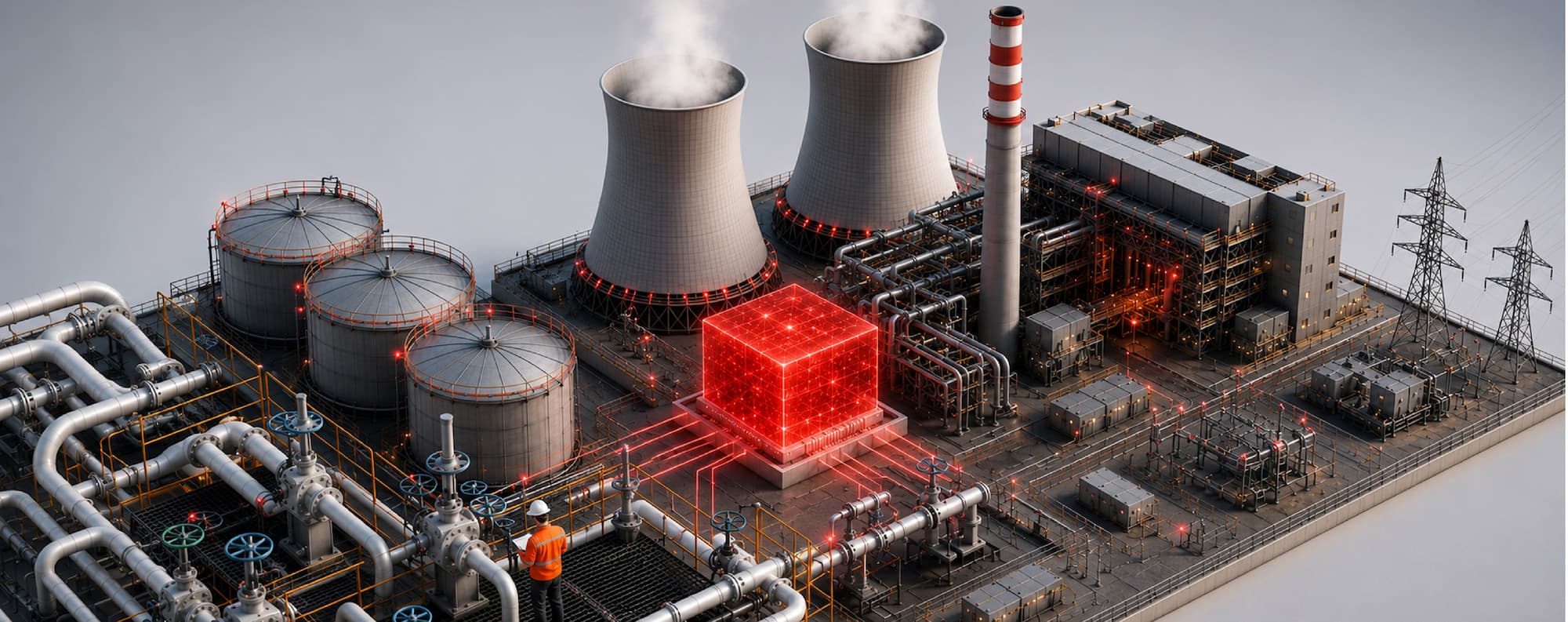
Built for baseload, today's thermal plants now balance renewable intermittency while remaining online for record demand. Yet they still rely on models calibrated for an operating regime that no longer exists. CodeNinja builds self-learning models of how each plant actually operates, deployed inside your environment and transferred to you in full at engagement close.
%20(1).jpg&w=3840&q=75)
The Plant’s Role is Evolving
A thermal plant designed, financed, and modeled for steady baseload does not run that way anymore. To balance a grid filling with intermittent renewables it starts, stops, and ramps constantly, and it is being ordered to stay available for a demand curve that NERC projects up more than twenty gigawatts this winter, driven substantially by AI data centers (NERC, 2026). Since January 2026 the Department of Energy has issued emergency orders under Section 202(c) compelling generators to remain online and dispatch to hold reliability.
The plant is running that new role on the models of the old one. The OEM heat-rate curve states an efficiency at design load, the maintenance schedule counts operating hours toward intervals built for continuous operation, and the emissions rate was measured at stable output. Under cycling, all three drift from reality at once, so the operator is accountable for the efficiency, life, and reliability of an asset its own reference models no longer describe.
The pressure is not where operators expected. Federal carbon regulation is loosening, with the EPA moving to repeal the greenhouse-gas standards for fossil plants in 2026 (EPA, 2026); the tightening is on reliability. Availability is now a legal obligation under the 202(c) orders, generator owners must report winterization status to NERC by June 1, 2026, and the grid is leaning on exactly the aging, cycled plants least able to promise it. The cost of guessing wrong has moved from a spreadsheet line to a compliance finding.
What the New Operating Regime Puts at Risk
Efficiency You Cannot See
Cycling raises heat rate in ways the design curve never modeled, so fuel and carbon per MWh climb invisibly and cannot be recovered.
Life You Cannot Time
Thermal fatigue consumes component life on a schedule the hours-based maintenance interval cannot see, mis-timing overhauls and replacement.
Availability You Must Prove
Reliability orders make availability a legal obligation, but true capacity and emissions under cycling are unknown to the operator's own models.
.jpg&w=3840&q=75)
The Curves Assume an Invalid Operating Model
Every number an operator plans against assumes the plant runs the way it was designed to. The design curve states a heat rate at steady load, the schedule counts hours toward a baseload overhaul interval, and the emissions figure was taken at stable output. Starts, stops, and ramps stress the plant in ways continuous running never did, so those references drift from the real plant in different directions at once.
The operator is not short of data; the unit is instrumented to the teeth. What is missing is a model of the plant as it behaves now rather than as it was specified to behave then. The plant changed roles, and its models did not.
Deriving Learning From The Plant’s Own Signal
The operators staying ahead are not buying a newer curve. They are building a model of the plant as it actually runs, learned from the unit's own starts, ramps, temperatures, and outputs under real cycled operation.
That model separates genuine degradation from operation and ambient, so recoverable efficiency can be recovered, tracks how much life each cycle has really consumed, so overhauls are timed to wear, and states the plant's true emissions and available capacity when a reliability order lands. It deploys from the DCS, historian, and CMMS infrastructure already in place, with no equipment replaced.
.jpg&w=2048&q=75)
A Model Trained on Your Unit, Not the Fleet Sheet
Physical AI for thermal generation is reasoning infrastructure built on your plant's operational reality. The models train on your unit's own thermal, mechanical, fuel, and emissions signals across its real operating cycle, and they act through the performance, maintenance, and reporting systems your teams already run. Nothing routes through CodeNinja infrastructure, no equipment is replaced, and every output is auditable from deployment.
.jpg&w=3840&q=75)
The Deployment Cycle
Signal Baseline establishes the data architecture from existing DCS, historian, and maintenance systems across the plant's cycled operation. Reasoning Fine-Tuning develops unit-specific models validated against the plant's own documented starts, outages, and performance tests, so the model is proven on the plant's real history before it informs a decision.
Production Deployment transfers the trained model stack permanently into your environment, with sovereign weights, golden-path datasets, and full documentation, and nothing retained by CodeNinja.
Physical AI Across Thermal Generation: Four Deployments
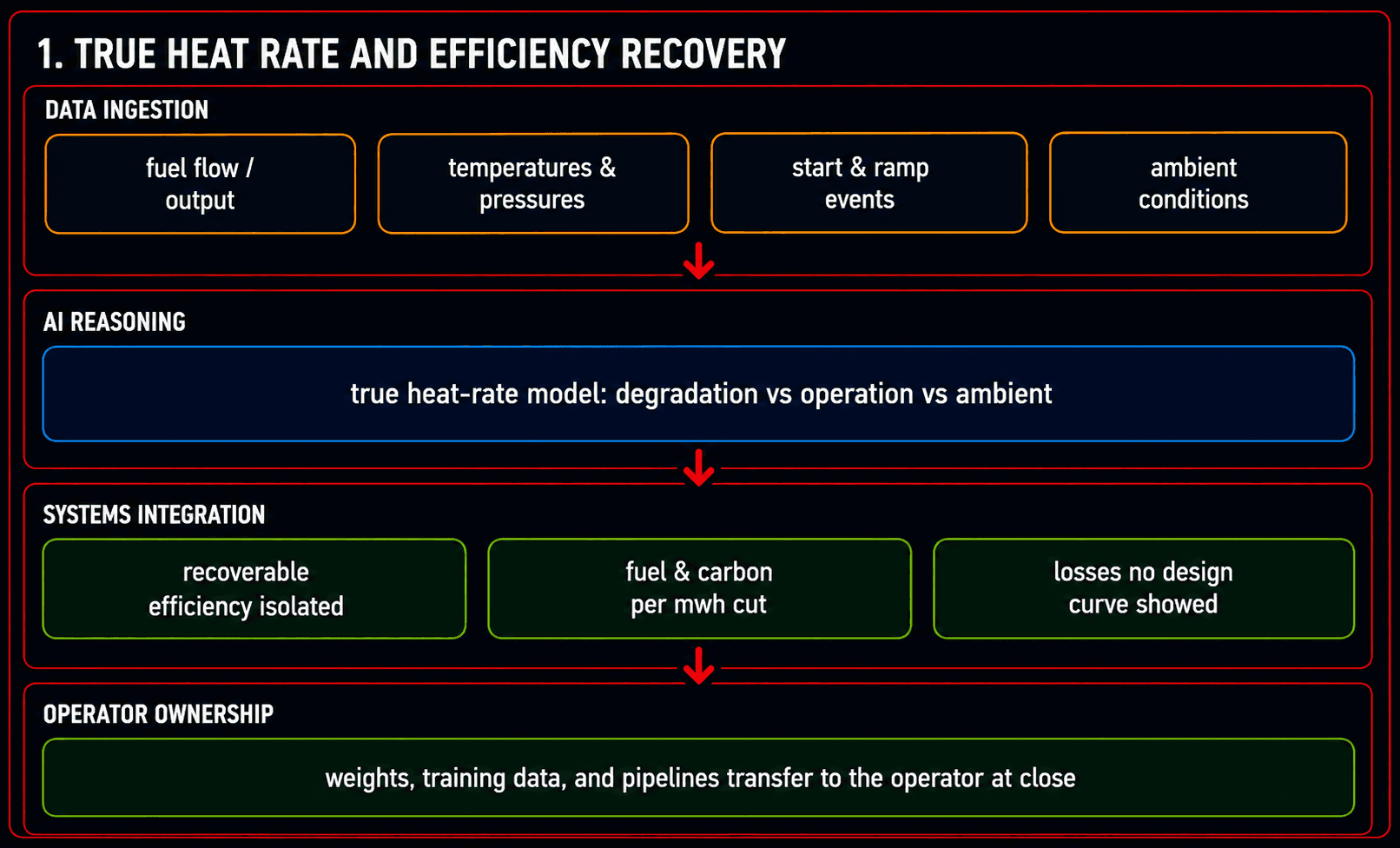
1. True Heat Rate and Efficiency Recovery
THE PROBLEM
Cycling pulls the plant off its efficient operating point through the ramps and part-load hours it now runs, and the design curve never modeled that operating regime. The operator sees a fuel bill higher than the curve predicts but cannot separate degradation from operation and ambient, so the lost efficiency is invisible and unrecoverable.
THE SOLUTION
The efficiency model reports the true heat rate the plant is achieving now and isolates genuine degradation from operation and ambient, so the recoverable portion can actually be recovered. Fuel cost and carbon per megawatt-hour fall, and losses no design curve could show become visible and actionable.
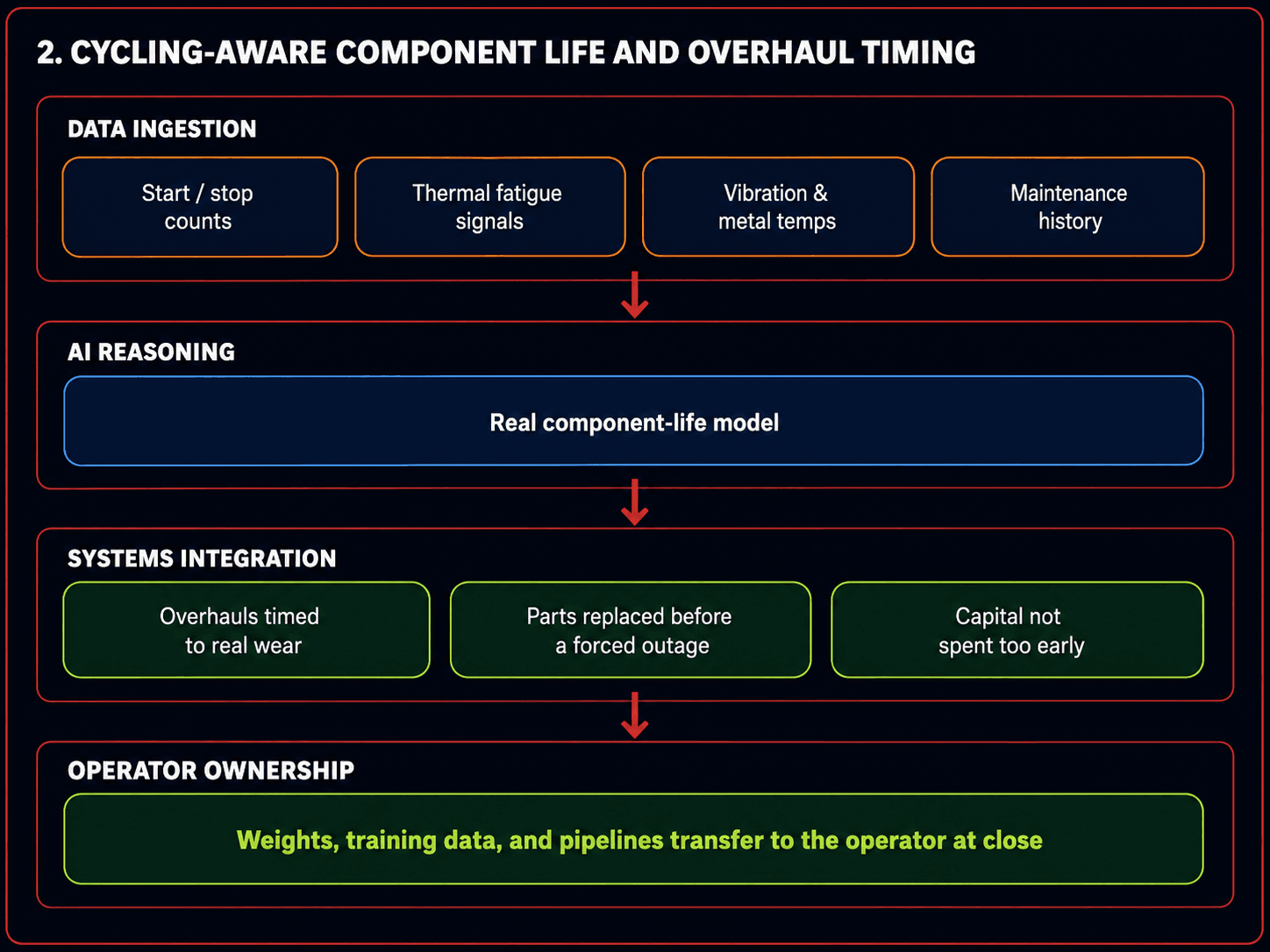
2. Cycling-Aware Component Life and Overhaul Timing
THE PROBLEM
Thermal fatigue from constant starts and stops consumes component life on a completely different schedule than baseload running, but the overhaul plan still counts operating hours against baseload intervals. It mis-times the most expensive decision in the plant: too early wastes capital, too late invites a forced outage at the worst possible moment.
THE SOLUTION
The life model tracks how much component life the plant's real operation has actually spent, so overhauls and replacements are timed to wear rather than to a calendar. Parts are replaced before a forced outage and capital is not committed early, and the highest-value maintenance decision is made on the plant's real condition.
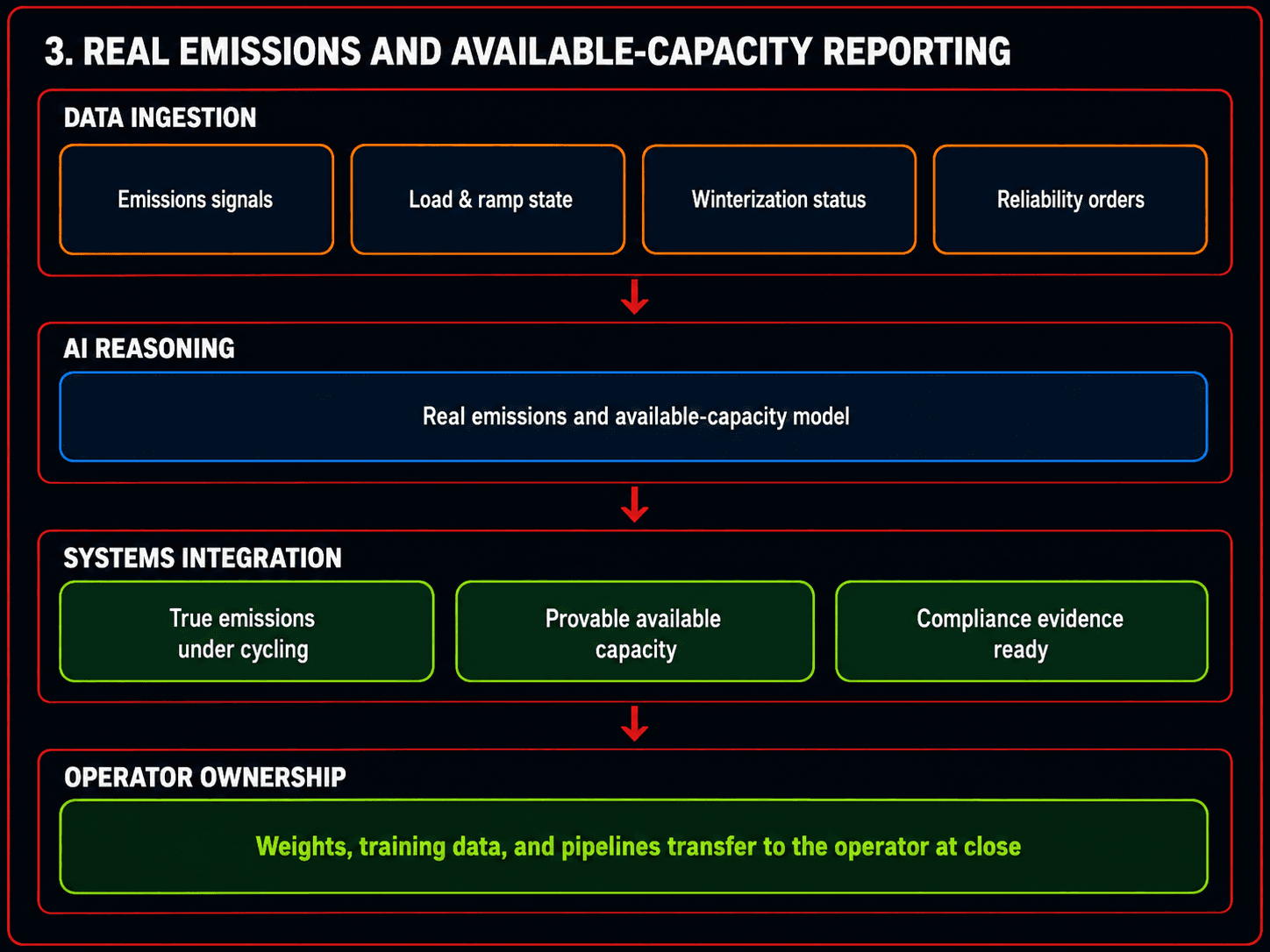
3. Real Emissions and Available-Capacity Reporting
THE PROBLEM
Under reliability orders the operator must guarantee availability and, in state carbon markets, account for emissions, but both are figures the nameplate models take at stable output. Cycling changes the real numbers, leaving the operator to promise a capacity and report an emissions rate its own models cannot substantiate.
THE SOLUTION
The reporting model states the plant's true emissions and real available capacity under its actual operation, so availability can be proven to a reliability regulator and emissions substantiated where a market prices them. Compliance evidence is produced from the plant's own operating record rather than from a design figure.
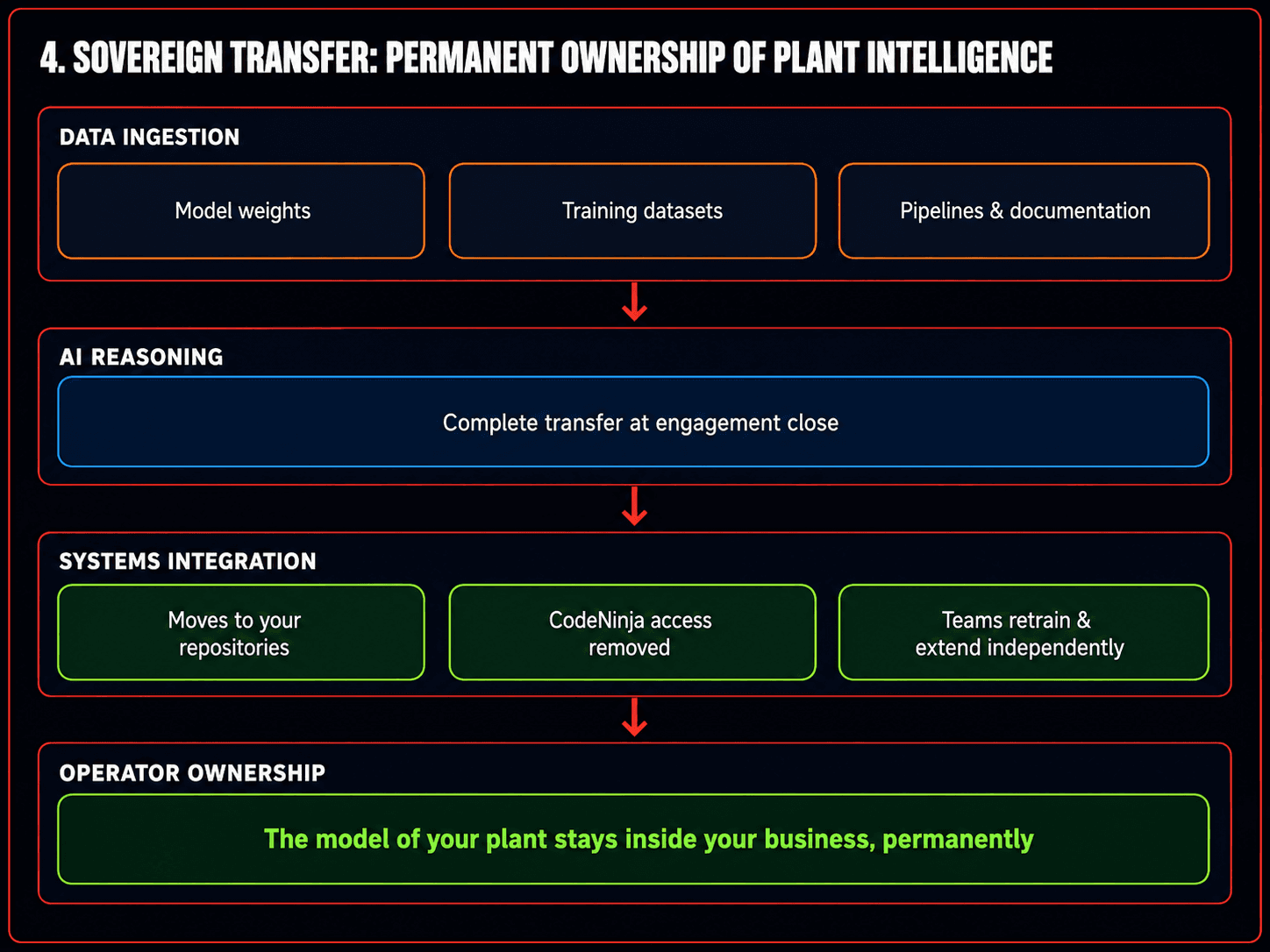
4. Sovereign Transfer: Permanent Ownership of Plant Intelligence
THE PROBLEM
A model of the plant built and hosted by a vendor, or inherited from the equipment maker, is a product calibrated across the fleet, not a mirror of your unit, and it does not come with you when the relationship changes. The intelligence that describes your plant's real behaviour stays on someone else's books.
THE SOLUTION
Every engagement closes with complete transfer. Fine-tuned weights, training datasets, pipelines, and documentation move to your repositories, CodeNinja access is removed, and your teams retrain and extend across other units independently. The model of your plant stays inside your business, permanently.
Frequently Asked Questions