Validated AI Infrastructure for Pharmaceutical Manufacturing
In Critical GMP, You Cannot Delegate Compliance to a Vendor
Regulators have now defined how AI can and cannot be used in critical GMP, and the requirement is the same in every framework: AI systems must be validated, controlled, and defensible. CodeNinja builds owned, validated AI infrastructure for your critical processes, governed by your quality function and transferred to you in full at close.
.jpg&w=3840&q=75)
.jpg&w=3840&q=75)
The Problem
In 2025, regulators published frameworks that for the first time explicitly define how AI can be used in critical GMP processes. The FDA issued draft guidance on assessing the credibility of AI models in regulated decisions, and the European Commission published draft GMP Annex 22 on artificial intelligence in pharmaceutical manufacturing. Both describe the same requirement: in critical processes, AI systems must be validated, controlled, and defensible, and black-box systems that update on external schedules cannot meet it.
This creates a market split. Manufacturers that own validated, controlled AI infrastructure now, before enforcement tightens, gain a two-to-three-year advantage in working systems, compliance evidence, and solved governance. Those that wait will be retrofitting compliance into systems never designed for it. The window is open now, and it will not stay open long, especially as the data underneath these processes grows, with 86 percent of manufacturers expecting data to be essential to competitiveness by 2030 (Gartner-cited manufacturing data study, 600 facilities).
The structural problem with vendor-hosted AI in GMP is that it breaks compliance by design. When you license a vendor-hosted model, it updates on the vendor's schedule, outside your awareness and approval. From a GMP perspective an update to a model used in quality decisions is a change to a quality control, and a change that happens outside your change-control system is a compliance violation. A model you cannot control cannot stay validated.
What Generic Approaches Put At Risk
Validated State
A vendor update outside your approval leaves the model operating in a state you have not validated.
Defensibility
When an investigator asks why a batch was accepted, the model deciding it must be one you can explain.
Enforcement Timing
Scrutiny tightens in 2027 to 2028; retrofitting compliance later is a business-threatening exposure.
.jpg&w=3840&q=75)
Why Rented Systems Break Compliance
GMP under 21 CFR Parts 211 and 600 applies fully to AI used in manufacturing and quality control; AI does not create an exemption, it creates new ways to meet or fail existing obligations. If a model makes or supports a decision about product quality, batch disposition, or deviation management, it becomes part of your quality system and must be qualified, validated, controlled, and explainable.
EU GMP Annex 22 goes further, permitting properly validated static models in critical processes while restricting black-box systems. A vendor cannot offer you a model on a vendor-controlled platform and simultaneously offer you change control over your quality systems, because the two are mutually exclusive.
Owning It Is the Only Way to Run AI in Critical GMP
Owned validated infrastructure does not mean building everything from scratch. It means the resulting systems are yours, governed by you, validated by you, and defensible by you. You validate models on your products under your operating conditions, document the validation, and control when and how they change.
Critically, learning and retraining happen only under your governance: when you add a new product you gather data, retrain, validate, and deploy under change control, all documented. Rented platforms update on the vendor's schedule; owned infrastructure updates only when you decide, and only after you have validated the update.
.jpg&w=2048&q=75)
Owned Validated Infrastructure, Defensible to Regulators
.jpg&w=3840&q=75)
The Deployment Cycle
An assessment selects one critical process, typically vision inspection for tablet or vial defects, and develops the governance framework you will use for all AI systems: change control, validation protocols, monitoring, and audit trail.
A model is built on your data, validated on your products and equipment, and deployed under that framework with drift detection in place, giving you evidence of a fully compliant, owned, validated system and a proven pattern to expand. A Validated AI Readiness Assessment runs 12 to 16 weeks.
Four Deployments
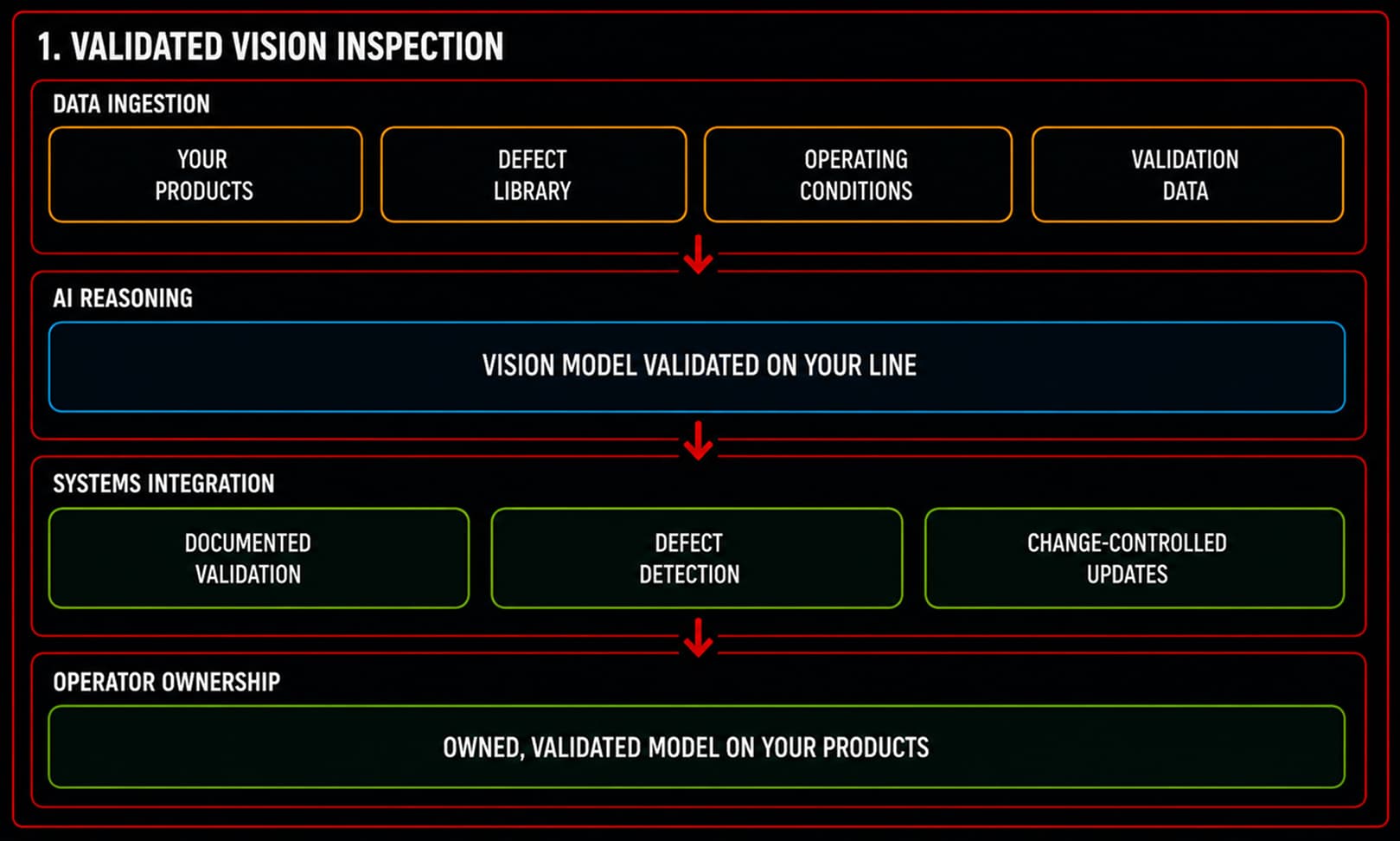
1. Validated Vision Inspection
THE PROBLEM
A vision model that inspects tablets or vials for defects becomes part of your quality system the moment it supports a quality decision, so it must be qualified and validated on your products under your conditions. A vendor-hosted model that updates on the vendor's schedule cannot hold a current validated state.
THE SOLUTION
You deploy a vision model trained on your products and validated on your line under your operating conditions, with the validation documented. Any change goes through your change control, so the model that makes quality calls is always in a state you have validated and can defend.
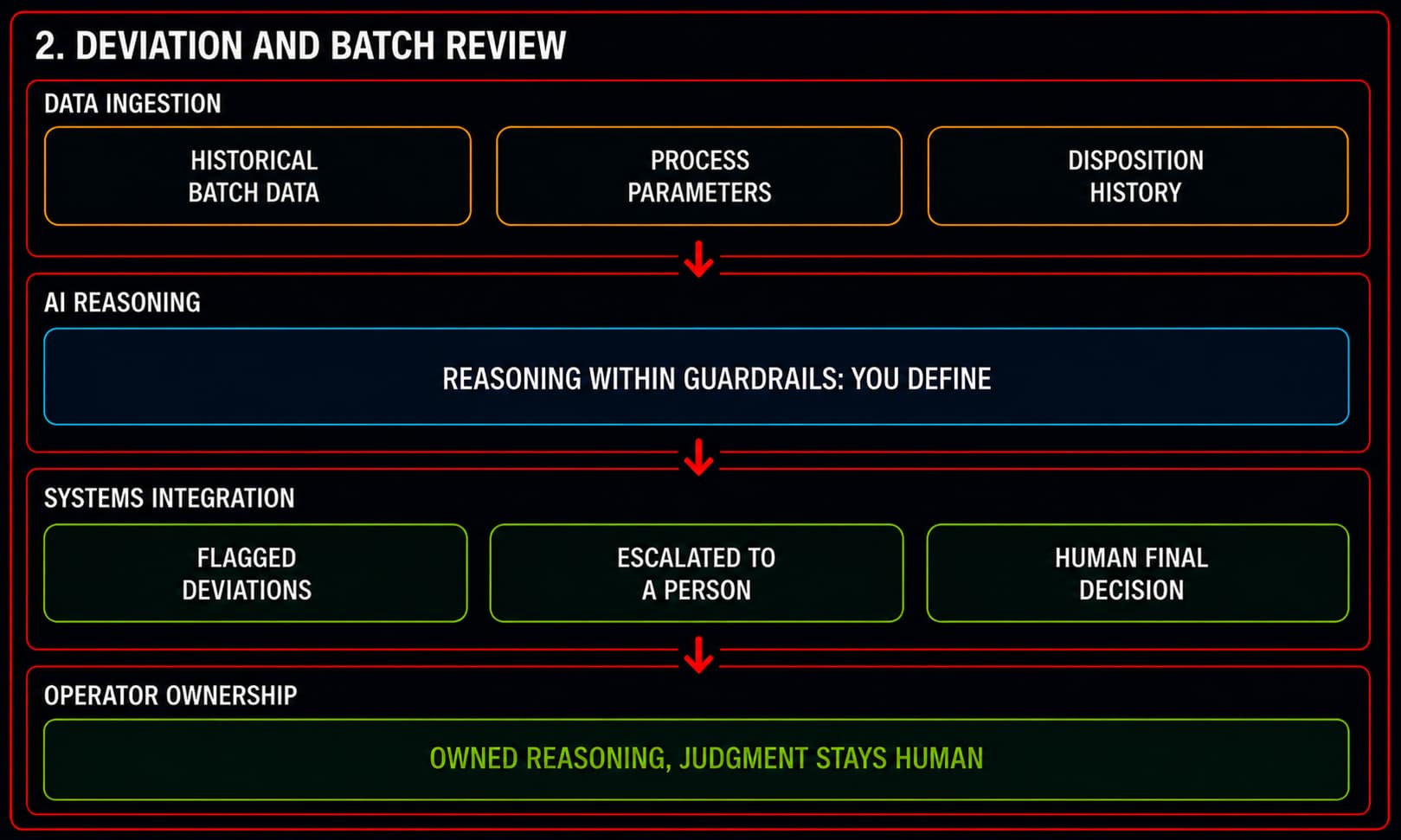
2. Deviation and Batch Review
THE PROBLEM
Reasoning over batch data can flag deviations and disposition issues faster than manual review, but in critical GMP the judgment cannot be delegated to a black box that you cannot explain to an investigator.
THE SOLUTION
Systems trained on your historical batch data and processes operate within guardrails you define, flag potential deviations, and escalate to a person who makes the final call. The system is an aid to human judgment, and the judgment stays human.
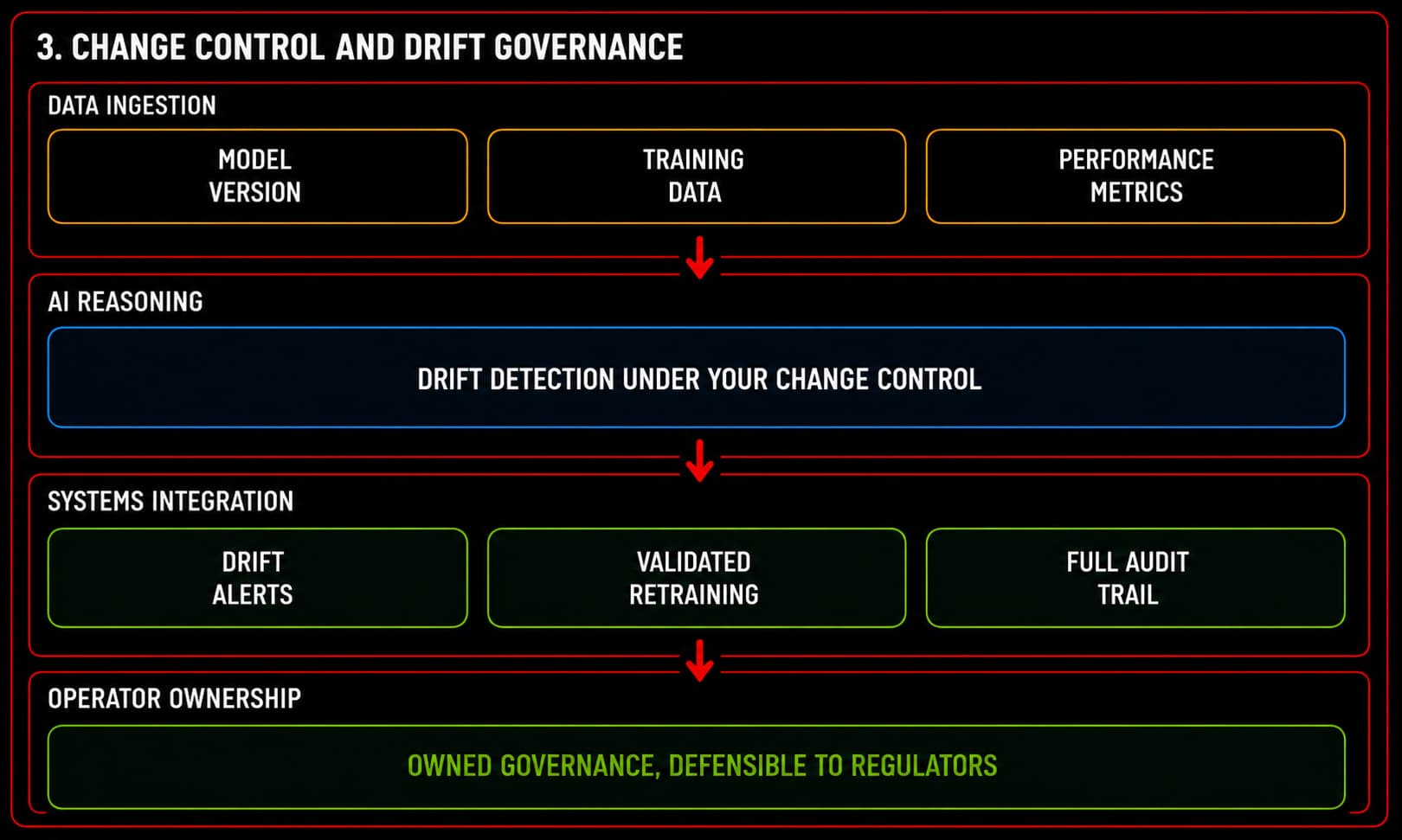
3. Change Control and Drift Governance
THE PROBLEM
A model used in quality decisions is a quality control, and a change to it outside your change-control system is a compliance violation. Without drift detection, a model can degrade below its validated performance without anyone knowing.
THE SOLUTION
Change control for AI systems, performance monitoring, and drift detection run under your governance. When a model needs retraining for a new product or process, you gather data, retrain, validate, and deploy under change control, with a complete audit trail that survives regulatory scrutiny.
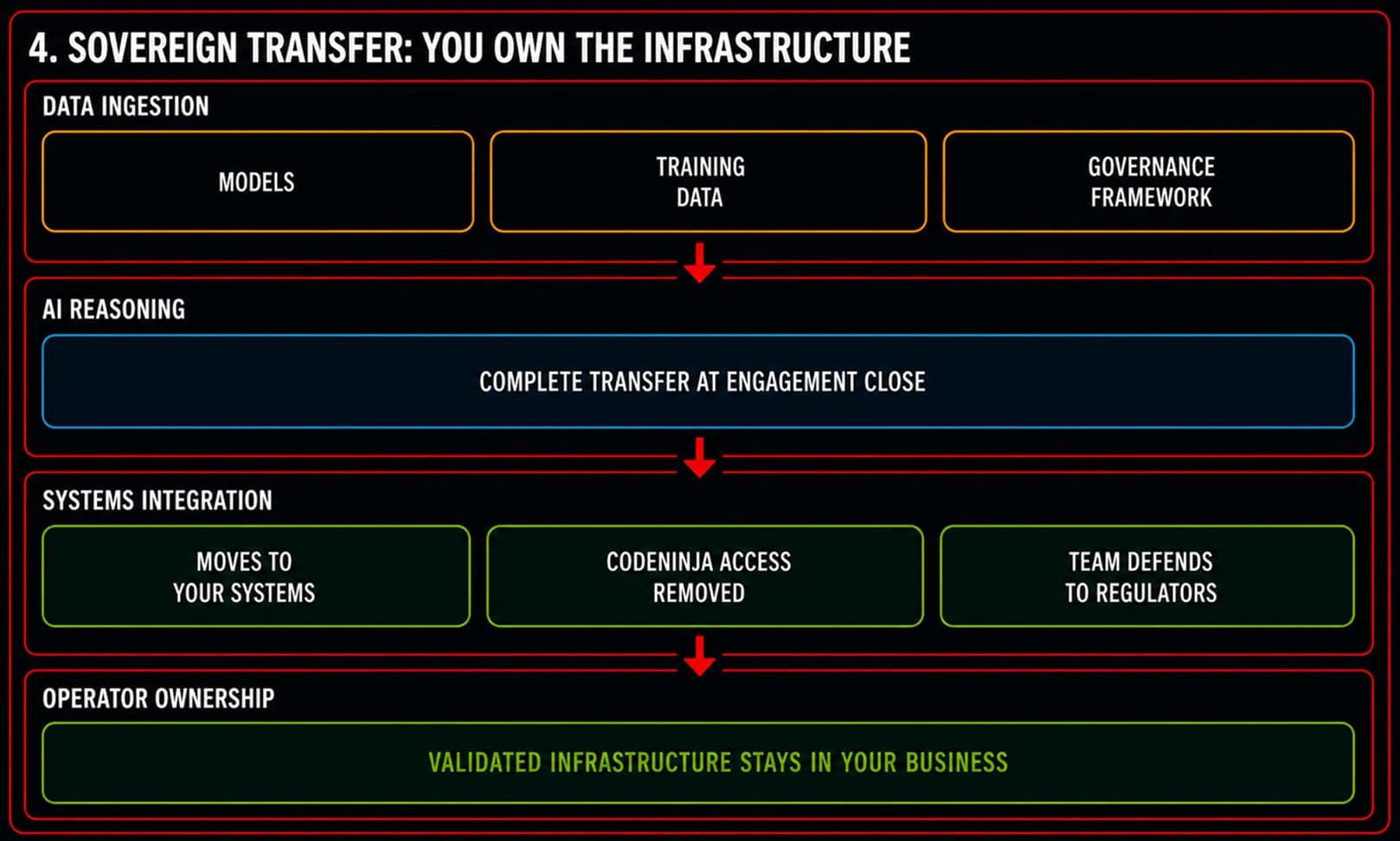
4. Sovereign Transfer: You Own the Validated Infrastructure
THE PROBLEM
A vendor platform serves many customers from one centralized system, which is structurally incompatible with change control that requires each manufacturer to govern its own changes independently. You cannot own the validation while the vendor owns the model.
THE SOLUTION
Every engagement closes with complete transfer. The models, training data, governance framework, and documentation move to your systems, and your team extends, updates, and defends them to regulators independently. The validated infrastructure stays inside your business.
Pharmaceutical Manufacturing Compliance Can No Longer Be Delegated
Validated vision inspection for tablet and vial defects, human-in-the-loop deviation and batch review within defined guardrails, change control and drift detection for AI systems under GMP, and audit-trail and documentation practices that survive regulatory scrutiny.

Frequently Asked Questions