The Great American Factory
Closing the productivity gap in the US physical economy by embedding Physical AI directly into factory floors, production lines, and critical infrastructure
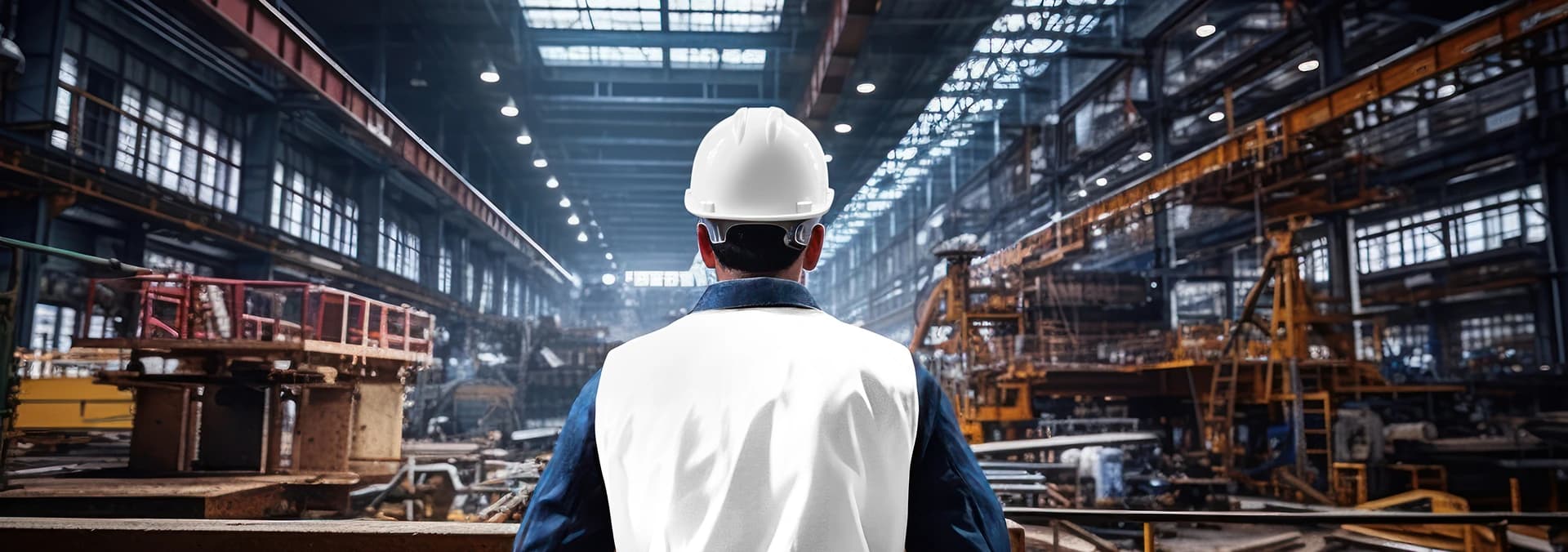
Bringing Factory Back to America
The most productive US manufacturers are already 5× more productive than the bottom decile, and that gap has widened for thirty years. Most organizations investing in AI fail to move beyond pilots. The analytical capability improves, but the operations do not.
China built its manufacturing edge through decades of process standardization, integrated supply chains, and accumulated operational knowledge. AI changes the equation. The institutional advantage that took thirty years to build can now be encoded, trained, and deployed in months.
The organizations that act on this first will define the next era of American industrial leadership.
The Great American Factory podcast exists to accelerate the transition from legacy systems to autonomous operations by bringing the most consequential thinkers in the space into unfiltered conversation. Every guest is a leader doing the work on the ground.
We discuss the friction of deploying Physical AI inside real operations: what is working, what is failing, and what the rest of the American industrial base must hear to remain competitive.
.jpg&w=3840&q=75)
The Cost of Intelligence Invisibility
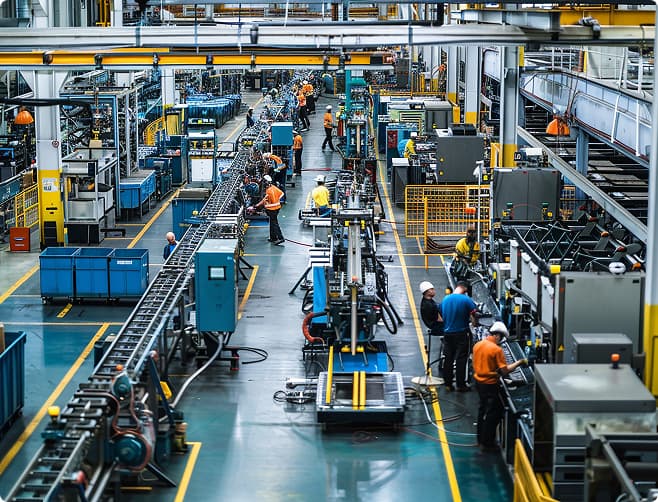
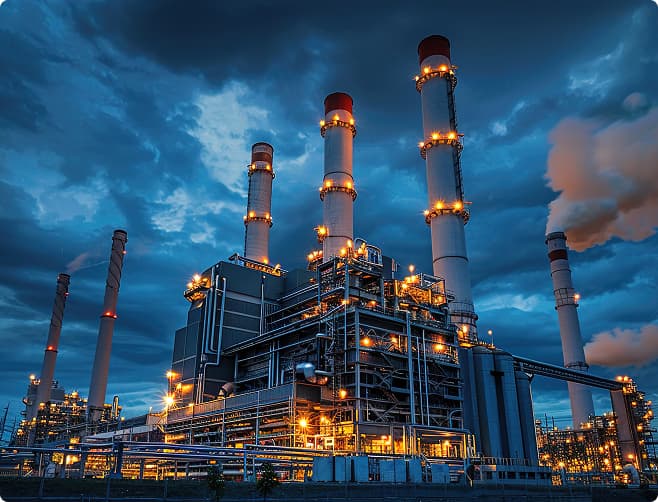
Manufacturing
A 3-point yield gap costs a $500M manufacturer up to $22.5M annually. Quality escapes caught post-shipment cost 100× more than those caught in line because the inspection layer was never trained on this facility's specific defect taxonomy.
Source: McKinsey Global Institute, 2023
.webp&w=1920&q=75)
Energy & Grid
Unplanned equipment failures cost the US energy sector $50B annually, with 45% of those failures predictable through advanced monitoring. Most facilities are still running reactive maintenance cycles against equipment whose degradation signatures have never been modelled.
Sources: Deloitte, 2025; McKinsey, 2023
.jpg&w=1920&q=75)
Retail & CPG
A 5-point inventory accuracy gap leaks $80M–$120M annually for a $2B retailer. $45B inself-checkout theft compounds it, driven by detection systems that were never trained on the transaction patterns and store-specific signatures of this environment.
Sources: NRF, 2025; Retail LP Research Council, 2025
.jpg&w=1920&q=75)
Healthcare
A 5-point clean claim rate gap costs a mid-size health system up to $15M annually.Physicians spend 2 hours on documentation for every 1 hour of patient care because the AI layer trained on this system's specific payer rules and coding patterns does not exist yet.
Sources: AMA, 2025; IBM/Ponemon, 2025
.jpg&w=1920&q=75)
Industrial Robotics & Automation
Warehouse labor costs are rising while throughput demands grow, yet manual quality inspection remains the standard on most US manufacturing lines, operating at a fraction of the speed and consistency of AI vision systems. The capability exists. The trained deployment does not.
Sources: PwC, 2024; McKinsey, 2022
.jpg&w=1920&q=75)
Defense & Perimeter Security
Critical infrastructure faces an evolving threat landscape that conventional radar cannot cover. Small commercial drones now represent the fastest-growing attack vector for restricted facilities. Security operations centers are drowning in siloed sensor feeds with no unified threat picture.
Sources: CISA, 2024; Deloitte, 2025
.jpg&w=1920&q=75)
Utility & Infrastructure Inspection
Power line and pipeline inspections are infrequent, dangerous, and manually executed, missing defects until failures occur. The result is $50B in annual infrastructure failure costs that continuous AI-assisted monitoring would make predictable.
Sources: KPMG, 2024; PwC, 2024
We Build Physical AI to Run the American Factory
CodeNinja is an American AI company on a mission to close the productivity gap in the U.S. physical economy. We build Physical AI systems trained on enterprise operational data, embedding reasoning directly into factory floors, production lines, energy facilities, and healthcare operations.
Tailored AI for Your Operation
- Every solution is built around your equipment, data, and operational constraints
- Engineered for environments where downtime affects safety, production, or revenue
- Computer vision, predictive intelligence, and robotics integrated from day one
- Not retrofitted onto legacy infrastructure
Deploy in the Real World
- Physical AI embeds reasoning directly into assets and production lines
- Work AI extends intelligence into workflows, compliance, and knowledge management
- AI Capability Centers provide sustained team support and governance
- Ensures deployments reach production and continuously improve
An Operational Moat You Own
- Proprietary datasets make AI trust able at production scale
- Models trained on your operational data compound intelligence with every cycle
- Creates unique operational knowledge competitors cannot replicate
- Establishes long-term differentiation that lives on your balance sheet
Starting from Constraints to Engineer Backwards
01
Discover
Tell us about your infrastructure and operational challenges. We identify the specific gap between what your systems can reason about and what your environment requires.
02
Design
We engineer a custom solution backwards from your constraints. Your data. Your failure modes. Your environment. No predefined platform.
03
Deploy
Production-grade Physical AI, validated in a digital twin before go-live, owned permanently by your organization and compounding in value with every cycle
The Gap Is Measurable. The Solution Is Operational.
CodeNinja works with US manufacturers, energy operators, healthcare systems, and industrial enterprises ready to move from pilot to production. If the founding argument of this show resonates with what you are building or what you are trying to fix, we want to hear